Quick Summary
A 2-K program introduces two-year-olds to early learning, routines, movement, communication, and social experiences. New York City’s free 2-K initiative launched in fall 2026 and currently runs in selected neighborhoods, while private toddler programs serve other communities. Woodside families should compare eligibility, classroom care, teacher experience, daily schedules, meals, facilities, and enrollment terms.
A 2-K program NYC families consider introduces two-year-olds to structured learning, group routines, active play, and caring teacher relationships. This early experience gives young children time to build confidence before 3-K and pre-K. For Woodside families, understanding program types, age rules, and classroom features can make the search clearer.
What a 2-K Program Means in NYC
The term 2-K generally describes early education designed for children who are two years old. A quality program balances guided activities with free play, movement, meals, rest, and gentle social learning.
New York City also uses 2-K for its new publicly funded early education initiative. This program differs from private toddler preschool programs that already serve children beginning at age two.
How Public 2-K Works
NYC Public Schools launched free 2-K in fall 2026, beginning in selected neighborhoods and expanding in later years.
The first-stage list covered neighborhoods in Districts 6, 10, 18, 23, and 27. Woodside did not appear on it, so families here should check the current district list before applying.
Families may apply citywide, although children receive priority within their home district when seats are available. Admission is not first come, first served.
Understanding NYC 2-K Eligibility and Age Rules
NYC 2-K eligibility follows birth year, covering children who turn two during the relevant calendar year. Most must already be two before attending their first program day, which differs from 3-K and Pre-K.
A child with a later birthday may receive a pending offer and begin after turning two. The 2-K program age rule therefore depends on birth year and start date.
Children do not need toilet training for the city initiative. Applications open for a set window each year through MySchools, by telephone, or at a Family Welcome Center, and families who miss it can ask about waitlists.
How 2-K Differs From 3-K and Pre-K
A NYC 2-K program serves two-year-olds, while 3-K generally serves children turning three during the calendar year. Pre-K usually serves children turning four that year.
Each stage reflects different language, movement, independence, and emotional needs. Two-year-olds often need shorter activities, closer care, predictable routines, and more help during transitions.
Families comparing 2-K schools NYC listings should check each program description carefully. Similar labels can refer to public 2-K seats or privately funded toddler classrooms.
Why NYC Preschool at Age 2 Matters
NYC preschool at age 2 can introduce children to sharing space, following simple directions, and communicating needs. Teachers can encourage toddler language development through songs, stories, conversations, and imaginative play.
Early classroom routines also teach children to put away materials, wash their hands, sit for meals, and move between activities. These small habits form a foundation for later school readiness.
A thoughtful program respects temperament, celebrates gradual gains, and allows learning through repetition.
What to Seek in an Age-Two Classroom
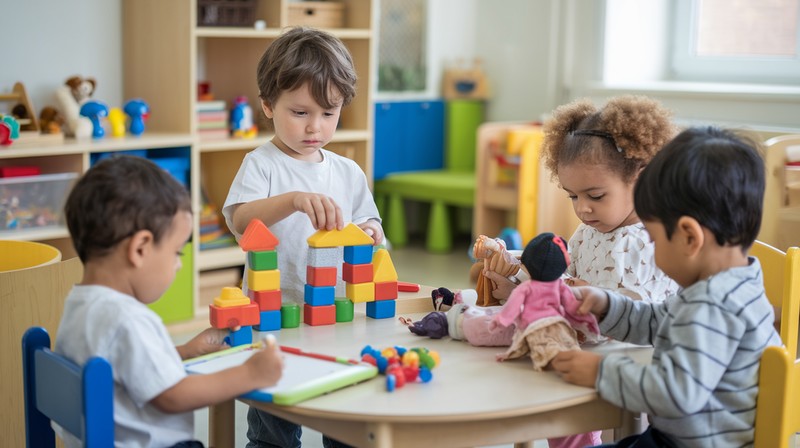
Look for licensed educators who understand toddler behavior and communicate warmly. Classrooms should contain age-sized furniture, inviting materials, safe movement areas, and quiet places for rest.
Ask how teachers handle separation, comfort upset children, guide biting or grabbing, and share daily updates.
Facilities also shape the daily experience. Outdoor play, soft indoor gym areas, creative spaces, and freshly prepared meals add variety throughout a two-year-old’s day.
Inside a Woodside 2-K Program Day
A Woodside 2-K program may start with greetings and open play. Songs, stories, art, and learning centers may follow. Meals, outdoor time, physical activity, and rest create a steady rhythm.
Our toddler program welcomes children ages two to three in a warm, family-like setting. Qualified teachers use hands-on activities to develop early language, social habits, curiosity, coordination, and growing independence.
Children can enjoy spacious classrooms, a private playground, a soft-mat gymnastics gym, and a stage for movement and performances. Our full kitchen staff prepares balanced meals from menus meeting or exceeding DOE standards.
Helping a Two-Year-Old Adjust to Preschool
Short, positive goodbyes help children understand that trusted adults always return. A familiar morning routine can also reduce uncertainty during the first weeks.
Parents can discuss school with simple, cheerful language and practice carrying a backpack or washing hands. A comfort item may help if program rules permit one.
Some children join activities quickly, while others observe before participating. Consistent attendance and calm communication between home and school help new routines feel familiar.
Building a Happy Beginning in Woodside
Starting preschool at two can open a joyful period of language, friendship, movement, and discovery. The right setting combines affectionate care with purposeful experiences suited to a toddler’s pace.
Families should compare eligibility, schedules, teaching methods, facilities, meals, and enrollment terms before choosing. A personal tour can reveal how children interact and how teachers shape each day.
Begin an Age-Two Preschool Journey
ABC Preschool welcomes Woodside children ages two to three into our nurturing toddler program, centered on play, learning, movement, nutrition, and school readiness. Contact us to discuss preschool enrollment, current availability, tuition, schedules, or a visit to our Woodside center.
FAQs
Is every two-year-old eligible for free 2-K in New York City?
Eligibility follows birth year, so children who turn two during the relevant calendar year may apply. Availability depends on the districts included that year, admissions priorities, and open seats.
What is the difference between 2-K and a toddler preschool program?
City 2-K refers to New York City’s publicly funded initiative. A toddler preschool program may be privately operated and can follow separate tuition, enrollment, and scheduling terms.
Does a child need toilet training before starting 2-K?
New York City’s public 2-K initiative does not require toilet training. Private programs may follow their own policies, so families should ask before enrollment.
What should families bring on a preschool tour?
Bring questions about schedules, meals, rest, teacher communication, safety procedures, separation, outdoor play, and enrollment. Observing the classroom atmosphere can also guide the decision.